security
Why You Should Never Pay First; The Golden Rule of Online Deals
Lilian Ejeh
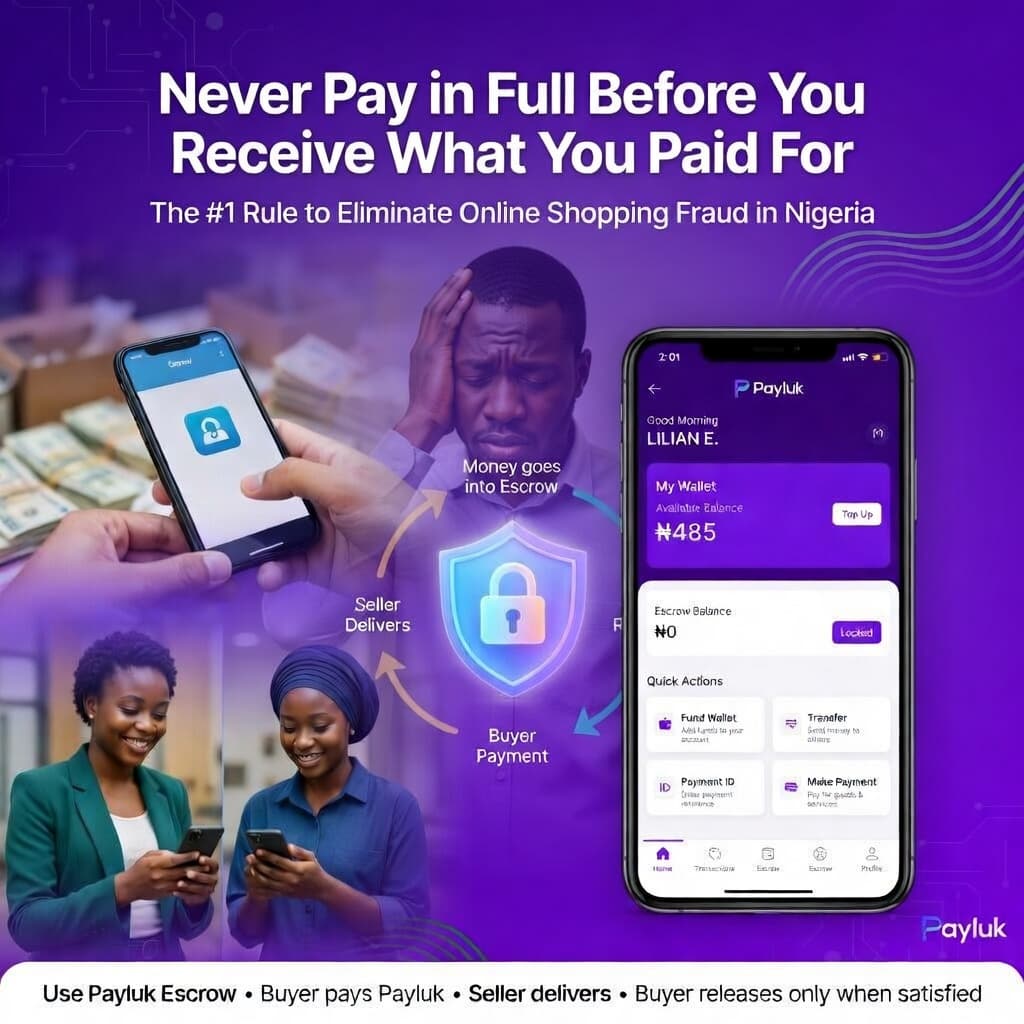
There is one rule that, if every Nigerian buyer followed it, would eliminate the vast majority of online shopping fraud overnight. It is not complicated. It does not require any technical knowledge. It is simply this: never pay in full before you receive what you paid for.
This seems obvious. Yet every day, thousands of Nigerians send money to strangers on WhatsApp, Instagram, and Jiji, and never see their goods. Understanding why this rule is so easily broken, and how to protect yourself when it is, is the foundation of safe online commerce in Nigeria.
Why Do People Pay First?
Scammers are not stupid. They are psychologically sophisticated. They understand exactly why buyers pay first, and they use every trick available to make you do it. Here are the most common tactics:
- Urgency: 'I have five other buyers interested. I need payment now, or I am moving on.'
- Social proof: 'Look at my testimonials and reviews. I have hundreds of satisfied customers.'
- Professionalism: A well-designed Instagram page, a website, a business name, and a CAC registration image.
- Trust anchors: 'I am verified. I have been selling for three years. My DHL tracking is real.'
- Sympathy: 'I already shipped based on your word. Please just confirm payment first.'
- Authority: 'This is policy. All orders require payment before dispatch. Every vendor works this way’.
When a scammer applies any combination of these tactics, especially under time pressure, even careful, educated buyers can be manipulated into paying before thinking clearly.
What Happens When You Pay First
The moment your money leaves your account in an unprotected transaction, you are at the mercy of the person who received it. In Nigeria's informal commerce environment, you have almost no legal recourse. Police reports are time-consuming and rarely result in recovery. Bank reversal requests succeed only in narrow circumstances. Social media reports take weeks and rarely result in account removal.
In practice, paying first means accepting that you may lose everything you sent, with no meaningful way to get it back.
Why Sellers Ask for Full Payment First, and Why You Should Not Always Comply
Many legitimate sellers also ask for full payment up front, and this is understandable. They have been burned before by buyers who receive goods and then dispute the bank transfer, forcing a reversal. Both buyers and sellers in Nigeria have legitimate reasons to distrust the other party.
This mutual distrust is exactly the gap that escrow fills. When both buyer and seller use Payluk, neither party has to trust the other blindly. The buyer pays Payluk, not the seller. The seller delivers, knowing the money is already secured. The buyer releases the payment only when satisfied. Nobody has to pay first, and nobody has to deliver first; the trust is built into the system.
The Three Situations Where Paying First Feels Unavoidable
1. The seller is in a different city
You find a phone in Lagos, you are in Abuja. The seller says they will ship after payment. This feels reasonable. How else would it work? The answer is Payluk. Fund the escrow, let the seller ship, and release payment only when the item arrives. The seller is incentivized to ship because they know the money is secured. You are protected because payment is not released until you confirm receipt.
2. The deal is time-sensitive
A product is being auctioned, a deal expires tonight, and a vendor is closing their Instagram live. Urgency is almost always manufactured by scammers specifically to prevent you from thinking carefully. Legitimate sellers will always accept an escrow arrangement because they know they will be paid once they deliver.
3. The seller does not accept escrow
If a seller categorically refuses to use any form of payment protection, treats your escrow request as an insult, or claims that escrow is 'too complicated', that refusal should be your biggest red flag. An honest seller has nothing to fear from escrow. Only someone who intends to take your money and not deliver has a reason to reject it.
How to Enforce the Rule Politely
You don't need to be aggressive about insisting on escrow. Here is a simple script you can use:
This framing works because it is non-accusatory, explains the benefit to the seller, and makes clear that you are committed to completing the deal, just safely.
The Bottom Line
The golden rule of online deals in Nigeria is not just a suggestion; it is the difference between keeping your money and losing it. Never pay in full before you have confirmation that you will receive what you are paying for. When paying through a regular bank transfer offers no protection, use Payluk's escrow service as the neutral party that keeps both buyer and seller honest.
Every legitimate deal can happen safely through escrow. Every deal that cannot happen through escrow should make you ask why.