Tips
Payment on Delivery in Nigeria: Why It Is Risky for Sellers and What to Do Instead
Gospel Chukwuemeka
Most online sellers in Nigeria have already decided that payment on delivery is not worth it.
The rejected deliveries. The ghost buyers. The courier comes back with your goods instead of your money. They tried it, saw what it was doing to their business, and stopped.
But some sellers still offer it. And the way they manage the risk is almost always the same. Keep it local. Limit it to buyers within their city. Stay close enough to sort things out if something goes wrong.
It makes sense. But even that compromise comes with a cost. The problems do not disappear just because the buyer is in the same city. Rejected deliveries still happen. Buyers still place orders and vanish. Return costs still eat into your margins. And on top of all that, your business is quietly limited to the buyers within reach.
Payment on delivery was meant to build trust with buyers. For sellers, it has mostly just created a different kind of stress.
Why Nigerian Buyers Ask for Payment on Delivery
Before we talk about the problem, it is worth understanding why buyers ask for payment on delivery in the first place.
Nigerian online buyers have been through a lot. They have paid for products that never arrived. They have sent money to vendors who disappeared after receiving payment. They have received items that looked nothing like the photos in the listing. And they have learned, sometimes the hard way, that paying upfront to a stranger on the internet is a risk they are not always willing to take.
Payment on delivery felt like the solution. If the goods arrive and they are satisfied, they pay. If not, they do not. It put the risk entirely on the seller and gave the buyer complete control.
That is not entirely unreasonable from a buyer's perspective. The problem is that it transfers all the risk from one party to another without actually solving the trust problem at the root of it. And for sellers, that transferred risk has a very real cost.
The Real Cost of Payment on Delivery for Sellers
If you have been selling online in Nigeria for any length of time, you already know this pain. But it is worth laying it out clearly because the true cost of payment on delivery goes deeper than most sellers stop to calculate.
Rejected Deliveries
The courier arrives at the address. The buyer is there. They look at the package, and for whatever reason, they change their mind. Maybe they found it cheaper somewhere else. Maybe they were never serious about buying in the first place. Maybe they just do not feel like it today.
They reject the delivery. The goods come back to you. And you are left with a product that may now be damaged from handling, packaging that has been opened or tampered with, and zero revenue to show for the effort.
Return Costs
A rejected delivery does not just cost you the sale. It costs you money you have already spent.
You paid to package the item. You paid the courier to deliver it. Now you pay again to have it returned. And if the product was damaged in transit, you may not even be able to sell it again at full price.
You spent twice and earned nothing. That is not a bad day. That is a broken business model.
Buyers Who Never Show Up
This one is particularly frustrating. The order comes in with a delivery address. You package the goods, dispatch them, and the courier arrives to find nobody home. They call the number and it rings out. They try again. Still nothing.
The goods come back. The buyer is unreachable. And you have wasted packaging costs, courier fees, and time that could have gone toward a genuine order.
In a business where margins are already thin, a handful of these every week adds up to a significant loss by the end of the month.
The Psychological Cost
Beyond the money, there is something harder to quantify but just as damaging.
The uncertainty. Not knowing. The checking your phone waiting for the courier to confirm. The sinking feeling when you see a return notification instead of a payment confirmation. Running a business should not feel like gambling, but for many Nigerian online sellers, every dispatched order under payment on delivery feels exactly like that.
That stress compounds over time. It limits how many orders you are willing to take. It makes you hesitant to scale. And it keeps your business smaller than it needs to be.
How Escrow Solves the Payment on Delivery Problem
Here is the fundamental issue with payment on delivery. It was designed to solve a trust problem but it only moved the risk from one party to the other. The buyer stopped trusting the seller, so the seller started carrying all the risk instead. That is not a solution. That is just a transfer.
Escrow actually solves the trust problem by protecting both parties at the same time.
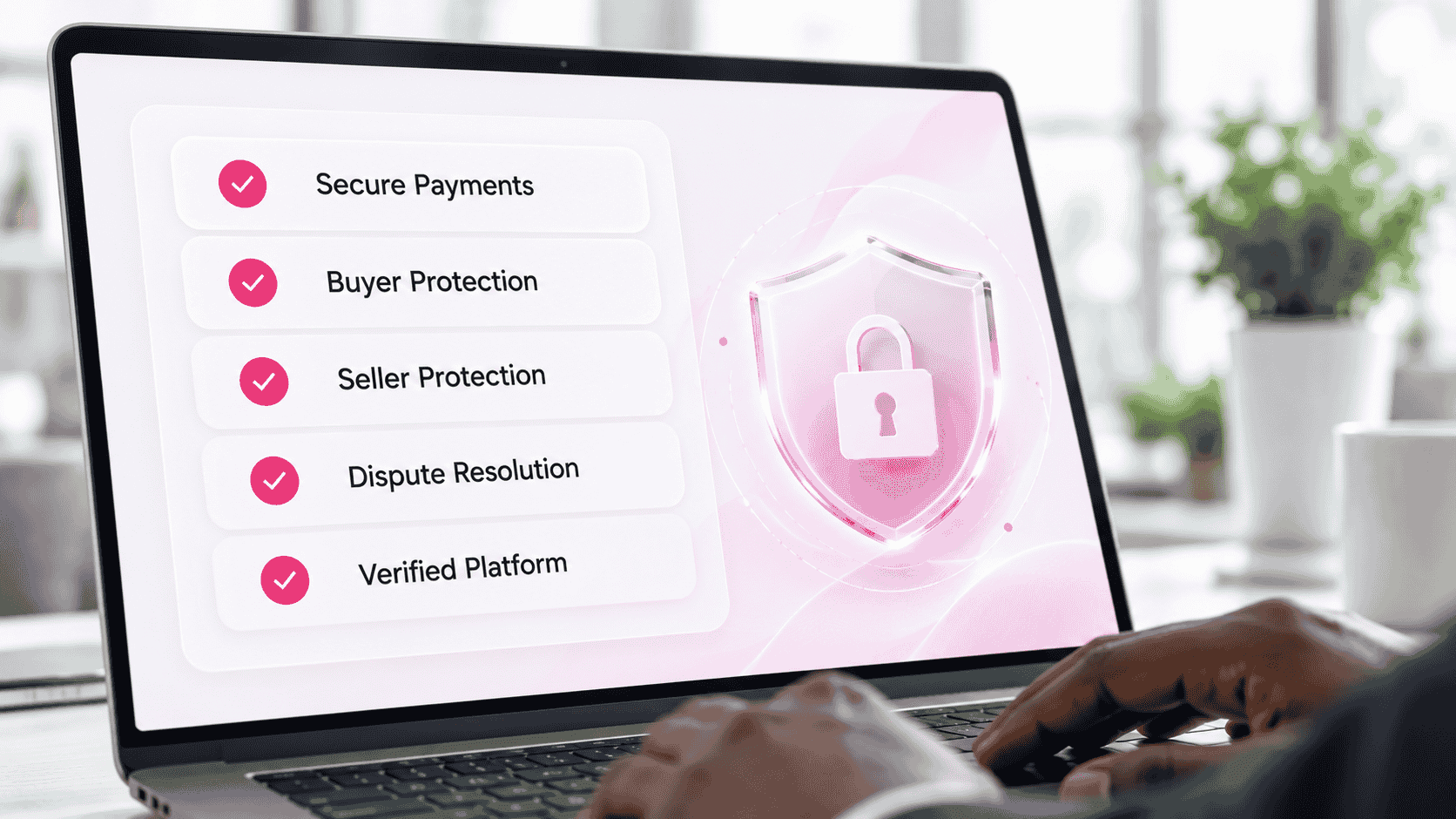
Here is how it works. Before you dispatch a single item, the buyer deposits the payment into a secure escrow account. The money is held there and neither you nor the buyer can touch it during that period. You can see that the funds are confirmed and available, so you dispatch with full confidence. The buyer knows their money is protected and will only be released when they confirm that the delivery arrived as described.
When the goods arrive and the buyer is satisfied, they confirm receipt and the funds are released to you. If something is genuinely wrong with the delivery, there is a structured dispute process to handle it fairly.
You dispatch knowing you will get paid. The buyer pays knowing they are protected. Nobody has to trust a stranger blindly.
But will buyers accept this?
This is the first question most sellers ask and it is a fair one.
The honest answer is that escrow gives buyers everything payment on delivery was supposed to give them. Their money does not go anywhere until they confirm delivery. If something is wrong, there is a process to protect them. The only difference is that the funds are secured upfront rather than handed over at the door.
For a buyer who genuinely intends to pay for what they ordered, escrow is no different from payment on delivery in terms of protection. And for sellers, it is the difference between dispatching with confidence and dispatching with anxiety.
The Benefits Escrow Brings to Your Business
Switching from payment on delivery to escrow does not just remove a problem. It actively improves how your business operates.
Guaranteed revenue on every dispatched order: When a buyer places an order through escrow, the funds are already secured before you package a single item. You are not dispatching on faith. You are dispatching on confirmed payment. Every order that leaves your hands has revenue attached to it.
Elimination of return logistics costs: Rejected deliveries and ghost buyers become a thing of the past. Because the buyer has already committed funds, the incentive to follow through on the order is real. You stop paying twice for orders that never convert and start keeping more of what you earn.
No more ghost buyers or rejected deliveries: A buyer who has deposited funds into escrow is a buyer who is serious about receiving their order. The casual browsers, the impulse orderers who change their minds, and the buyers who were never really going to pay are filtered out before you spend a naira on packaging or logistics.
A more professional payment process that builds buyer trust: Offering escrow signals to your customers that you operate at a higher standard. It shows that you have thought about their protection, not just your sale. That professionalism builds the kind of trust that turns first-time buyers into repeat customers and repeat customers into referrals.
Ability to scale and sell nationwide without fear: With payment on delivery, growing your business means growing your risk. Every new order is another gamble. Escrow changes that completely. You can take more orders and take them from anywhere in Nigeria, from Lagos to Kano, Enugu to Port Harcourt, without fear of rejected deliveries, return costs, or ghost buyers in cities you cannot physically reach. Your revenue grows. Your risk does not.
How to Get Started With Payluk
Payluk is a Nigerian escrow platform that makes it straightforward for online sellers and vendors to move away from payment on delivery and start transacting with full protection on every order.
Setting up your account takes just a few minutes. Once you are on the platform, you can start creating escrow transactions for your orders and giving your buyers a safer, more structured way to pay.
Sign up on the web at app.payluk.ng or download the mobile app:
Have questions about how Payluk works for your specific type of business? Reach out directly at support@payluk.ng and the team will walk you through it.
Payment on Delivery Was Never Really the Answer
It felt like a solution because it gave buyers a sense of control. But it did that by putting sellers at the mercy of every buyer's mood, location, and intention on delivery day.
Escrow does something payment on delivery never could. It protects both sides at the same time. The buyer keeps their money safe until they are satisfied. The seller dispatches knowing the revenue is secured. And the transaction closes without anyone having to take a leap of faith.
Your business deserves better than anxiety and return trips. Start transacting with confidence.